logotype
  • Home
  • About Us
  • Services
    • Wind Turbine
    • Telecom Towers
    • Skyscrapers
    • Factories & Facilities
  • Products
    • SH- Acceleration
    • SH-Inclinometer
    • Bench-Scale Shake Tables
  • Resources
    • Success Stories
    • Blog
    • Materials
  • Contact Us
  • Struct Health Türkiye Resmî Sitesi

Free Consultant

+90 (262) 606 16 28

SHM Center
logotype
  • Home
  • About Us
  • Services
    • Wind Turbine
    • Telecom Towers
    • Skyscrapers
    • Factories & Facilities
  • Products
    • SH- Acceleration
    • SH-Inclinometer
    • Bench-Scale Shake Tables
  • Resources
    • Success Stories
    • Blog
    • Materials
  • Contact Us
  • Struct Health Türkiye Resmî Sitesi
logotype
  • Home
  • About Us
  • Services
    • Wind Turbine
    • Telecom Towers
    • Skyscrapers
    • Factories & Facilities
  • Products
    • SH- Acceleration
    • SH-Inclinometer
    • Bench-Scale Shake Tables
  • Resources
    • Success Stories
    • Blog
    • Materials
  • Contact Us
  • Struct Health Türkiye Resmî Sitesi
logotype
  • Home
  • About Us
  • Services
    • Wind Turbine
    • Telecom Towers
    • Skyscrapers
    • Factories & Facilities
  • Products
    • SH- Acceleration
    • SH-Inclinometer
    • Bench-Scale Shake Tables
  • Resources
    • Success Stories
    • Blog
    • Materials
  • Contact Us
  • Struct Health Türkiye Resmî Sitesi
Blog
Home Archive by Category "Blog"

Category: Blog

Blog
Struct03/10/2026 0 Comments
Share article:TwitterFacebookPinterestLinkedin
42 Views
1 Like

IoT-Based Structural Health Monitoring in 2026: A Powerful Approach to Post-Earthquake Rapid Assessment

At StructHealth, we are pleased to share that our research on IoT-based structural health monitoring for post-earthquake rapid assessment has been published. This publication represents an important milestone for our team, as it demonstrates not only the practical deployment of our monitoring architecture in the field, but also its scientific validation through an academic study.

The published work focuses on a scalable structural health monitoring framework designed to support rapid, data-driven decision-making after earthquakes. The proposed system integrates multi-axis MEMS accelerometers, inclinometers, edge-level processing, cloud-based analytics, and automated damage interpretation into a unified architecture. Rather than functioning as a simple sensor network, the system is developed as a full monitoring and assessment platform capable of transforming raw structural response data into engineering insight. MDPi

Why post-earthquake rapid assessment matters

IoT-based structural health monitoring is becoming a critical engineering tool for post-earthquake building assessment, especially in high-risk seismic regions.Following an earthquake, one of the most critical challenges for engineers, facility owners, and public authorities is determining whether a structure can continue to operate safely. Conventional visual inspections remain essential, but they can be delayed by transportation disruptions, aftershocks, limited expert availability, and the scale of the building inventory that must be evaluated within a short time.

This is where IoT-based structural health monitoring becomes especially valuable. By continuously measuring and analyzing the dynamic response of a building, a monitoring system can provide rapid and objective information about structural behavior immediately after a seismic event. Instead of relying solely on external visual signs, engineers can also evaluate how the structure actually responded during the earthquake.

A monitoring architecture designed for real-world deployment

The core contribution of our published study is the development of a scalable SHM architecture suitable for real-world operation in seismic regions. The platform combines:

  • multi-axis MEMS accelerometers for dynamic motion measurement,
  • inclinometers for tilt and permanent drift tracking,
  • local gateway and edge-processing components for event-based data handling,
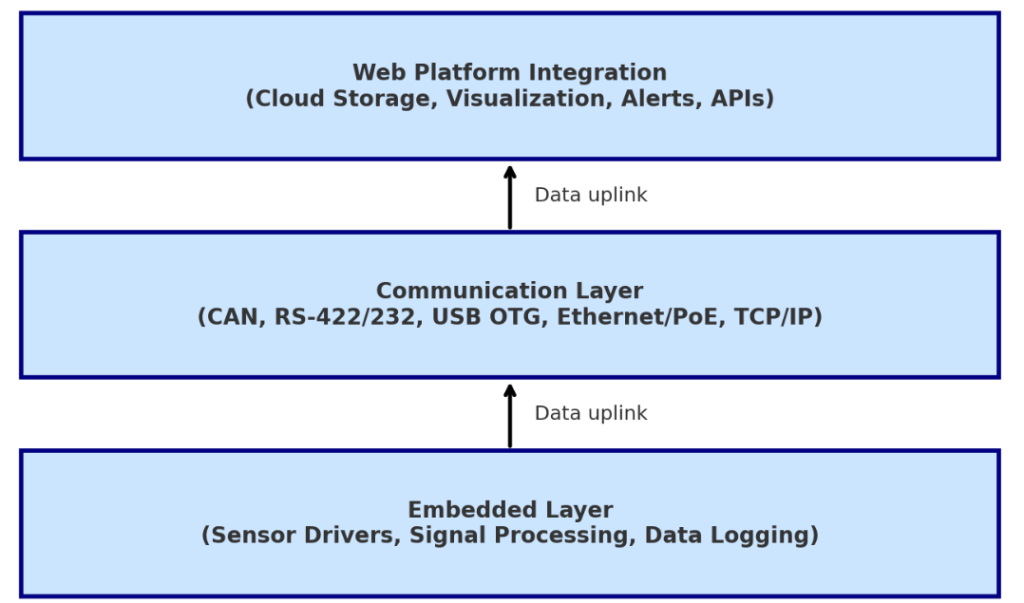
  • cloud infrastructure for storage, analysis, and visualization,
  • and a web-based interface for rapid engineering interpretation.

This architecture is designed to support both continuous monitoring and event-triggered assessment. During normal operation, the system maintains a stable observation layer over the structure. When a seismic event occurs, the platform automatically processes the recorded data, extracts key performance indicators, and generates interpretable outputs for post-earthquake evaluation.

A major advantage of this approach is that it reduces the gap between raw instrumentation and decision support. In many monitoring systems, data collection is achieved successfully, but the interpretation stage remains manual, fragmented, or slow. Our approach addresses this challenge by linking sensing, processing, analytics, and reporting within a single workflow.
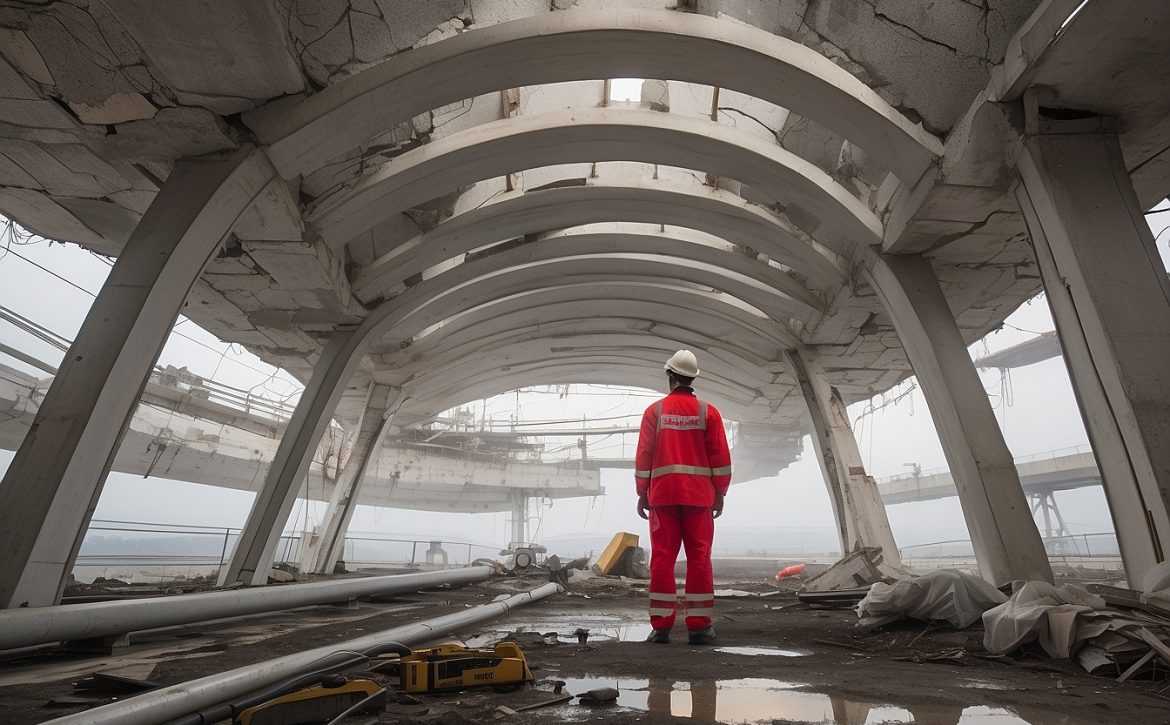
IoT-based structural health monitoring

From raw vibration data to structural performance indicators

A central technical aspect of the study is the use of multiple structural indicators rather than a single damage metric. This is important because post-earthquake behavior cannot be reliably represented by one parameter alone. Buildings may exhibit subtle changes in stiffness, transient torsional effects, localized displacement demands, or residual tilt without showing immediate visible distress.

For this reason, the proposed methodology evaluates several response features together, including:

Natural frequency and period shifts

Changes in dynamic characteristics are among the most widely used indicators in structural health monitoring. A reduction in natural frequency may indicate stiffness degradation or damage accumulation. By comparing the structural response before and after seismic excitation, the system can detect whether the building exhibits a meaningful change in its modal behavior.

Inter-storey drift and roof displacement

Relative floor displacement is one of the most important measures of seismic demand. Excessive inter-storey drift can be associated with non-structural damage, cracking, or more severe structural response. Roof displacement also provides a practical representation of global lateral behavior and is especially useful in high-rise buildings.

Torsional irregularity

In asymmetric or irregular buildings, lateral motion may be accompanied by torsional response. Monitoring this effect is essential because torsional amplification can increase demand on certain vertical elements and floor regions. The study incorporates torsional behavior into the automated assessment logic, improving the robustness of the interpretation process.

Permanent tilt and residual deformation

Even when peak vibration levels do not indicate severe instability, residual deformations may still reveal damage or permanent structural change. Inclinometer-based monitoring allows the system to check whether the building exhibits measurable residual tilt after an event, which is highly relevant for rapid safety screening.

By combining these indicators, the platform produces a more reliable and engineering-oriented evaluation than a threshold based on a single signal feature.

Field validation on a real high-rise building

From an operational perspective, IoT-based structural health monitoring enables faster interpretation of structural response data and supports more reliable building screening after seismic events. One of the strongest aspects of the published work is that the system was not presented only as a conceptual framework or laboratory prototype. It was deployed and validated on a 22-storey reinforced concrete office building, allowing the research to demonstrate how the platform performs under actual field conditions.

This real-world validation is important for several reasons. First, high-rise structures exhibit complex dynamic behavior, including modal participation across multiple levels and possible torsional effects. Second, field deployment introduces practical engineering constraints such as sensor placement, communication stability, long-term data continuity, and event management. Third, the performance of a monitoring platform in a real building provides far more meaningful evidence than a purely theoretical or bench-scale demonstration.

The study shows that the proposed platform can record structural response data from seismic events, process that data automatically, and support post-earthquake evaluation using a structured damage assessment logic. This makes the work directly relevant to owners and operators of office towers, hospitals, campuses, industrial facilities, and other critical assets located in seismic zones.

Why scalability is a key engineering requirement

For structural health monitoring to become truly useful at the city, portfolio, or institutional level, scalability is essential. A system that performs well on a single building is valuable, but the broader challenge lies in monitoring many buildings efficiently and consistently.

Our research therefore emphasizes a scalable event-based monitoring strategy. Instead of continuously pushing all raw high-frequency data to the cloud without prioritization, the architecture uses local intelligence and event-triggered workflows to optimize communication, storage, and processing loads. This is particularly important when dealing with large monitoring networks or building portfolios.

From an engineering operations perspective, scalability affects:

  • bandwidth demand,
  • storage efficiency,
  • computational cost,
  • alerting speed,
  • and the practicality of large-scale deployment.

A scalable SHM system must not only measure accurately but also remain manageable when expanded across multiple structures. This is one of the reasons why edge processing and cloud orchestration were integrated into the system design.

Bridging structural monitoring and decision support

Another important contribution of the study is the move from conventional data logging toward decision-support-oriented SHM. In many practical scenarios, asset owners do not simply need waveform data; they need concise and defensible answers to questions such as:

  • Did the building remain within expected performance limits?
  • Was there evidence of excessive drift or abnormal torsional response?
  • Is there any sign of permanent deformation?
  • Should the building be prioritized for detailed engineering inspection?

Our platform addresses this need by converting measured data into a performance-oriented interpretation layer. This does not replace detailed engineering investigation, but it significantly improves the speed and quality of early-stage post-earthquake screening.

In this sense, IoT-based structural health monitoring becomes more than a sensing technology. It becomes a tool for risk-informed operational decision-making.

What this publication means for StructHealth

For StructHealth, this publication is more than an academic achievement. It confirms that the monitoring philosophy we have been developing — combining field-ready hardware, real-time analytics, scalable communication architecture, and automated engineering evaluation — can stand on both practical and scientific ground.

Our work reflects a broader vision for the future of structural monitoring: systems that are not only technically precise, but also operationally useful, scalable, and aligned with real post-earthquake needs. We believe that this direction is essential for improving resilience in buildings and infrastructure exposed to seismic hazard.

Looking ahead

The publication also supports the next stage of development for advanced structural monitoring solutions. Future progress in this field will increasingly depend on deeper integration between sensing systems, digital twins, structural models, automated modal analysis, and intelligent reporting environments.

At StructHealth, we see IoT-based structural health monitoring as a foundation for this larger ecosystem. The long-term goal is not only to observe structures, but to create continuously updated digital representations of their condition and behavior, enabling more proactive asset management and more confident post-event decisions.

Conclusion

This study confirms that IoT-based structural health monitoring can provide a scalable and technically robust foundation for post-earthquake rapid assessment. Our published research demonstrates that IoT-based structural health monitoring for post-earthquake rapid assessment is a practical and technically robust approach for modern seismic risk management. By integrating MEMS sensing, inclinometer-based residual response tracking, edge processing, cloud analytics, and multi-parameter damage interpretation, the proposed platform offers a comprehensive pathway from structural response measurement to actionable engineering insight.

As the need for resilient, data-driven infrastructure management continues to grow, we believe such systems will play an increasingly important role in post-earthquake evaluation, portfolio-scale monitoring, and the broader digital transformation of the built environment.

READ MORE
Blog
Struct11/18/2025 0 Comments
Share article:TwitterFacebookPinterestLinkedin
154 Views
18 Likes

Hongqi Bridge Collapse: Critical Reasons Why Bridge Structural Health Monitoring Is Essential

Bridge Structural Health Monitoring

In November 2025, part of the 758-metre Hongqi Bridge in Sichuan, China, collapsed just months after opening to traffic. Fortunately, the bridge had been closed the day before, and no casualties were reported – but the incident raises a critical question: how safe are our modern bridge and viaduct structures, really? This incident is a clear reminder that bridge structural health monitoring is essential if we want to understand how our critical assets behave over time, not only at the moment of failure.Reuters+1


1. What Happened at the Hongqi Bridge?

The Hongqi Bridge in Maerkang, Sichuan Province, was designed as a flagship infrastructure project on China National Highway 317, connecting Sichuan with Tibet across steep mountainous terrain. The bridge is about 758 metres long, with piers up to 172 metres high, carrying a two-lane road across a deep canyon near the Shuangjiangkou hydropower project. Vikipedi+1

Key facts:

  • Construction was completed in early 2025, and the bridge opened to traffic in April 2025. Vikipedi+1
  • On 10 November 2025, local authorities noticed cracks in nearby slopes and roads, and signs of terrain deformation on the mountainside. The bridge was closed to traffic as a precaution. Reuters+1
  • On 11 November 2025, a landslide on the right-bank slope triggered the collapse of the western approach and roadbed. The main central spans largely remained standing, while the approach section failed dramatically – an event captured in widely shared video footage. The Washington Post+2Sky News+2
  • Thanks to the prior closure, no casualties were reported. Guardian+1

Initial official statements pointed to the landslide as the primary cause of the collapse. At the same time, engineers and the public have raised broader concerns about geological risk, slope management, and potential design or construction deficiencies in such complex terrain. Vikipedi+2eos.org+2


2. How Can a Brand-New Bridge Become So Risky So Quickly?

From a public perception standpoint, the instinctive question is:

“How can a bridge that opened just months ago partially collapse already?”

From an engineering perspective, the picture is more nuanced – and very instructive.

2.1 Geotechnical risk can outweigh superstructure quality

Even if the superstructure is built with high-quality materials and state-of-the-art design, the weakest link is often the ground:

  • steep slopes and landslide-prone geology,
  • changing groundwater conditions,
  • large-scale hydraulic projects (like nearby reservoirs) altering the stress state,
  • heavy rainfall events and long-term weathering. eos.org+1

The Hongqi case illustrates that a “perfect” bridge on an unstable slope is still a high-risk system.

2.2 Warning signs existed – but late in the process

The good news: visible cracks and terrain shifts were detected, and authorities closed the bridge in time. This is a successful example of emergency risk management.

The more strategic question is:

Could we have seen these signals earlier, in a more quantitative way, before visible damage and dramatic slope movement?

That’s precisely where continuous monitoring makes the difference between reactive and proactive safety.

2.3 Structures are not static; they live in a changing environment

Design codes and calculations are essential, but they are just the starting point. Once a bridge goes into service, it is exposed to:

  • daily and seasonal temperature cycles,
  • traffic loading and fatigue,
  • earthquakes and aftershocks,
  • rainfall, reservoir level changes and groundwater fluctuations,
  • long-term soil creep and consolidation.

Without long-term monitoring, we see only snapshots of the bridge’s health – not the full story. Effective bridge structural health monitoring turns these snapshots into a continuous timeline, making it possible to see how the structure and its foundations evolve under real environmental and loading conditions.

This is why bridge structural health monitoring (SHM) is moving from “nice to have” to core safety requirement in complex environments.


3. What Should Structural Health Monitoring for Bridges Include?

The Hongqi Bridge collapse is a powerful reminder of what a minimum SHM package for bridges and viaducts should look like, especially in mountainous or geotechnically complex areas.

3.1 Geotechnical and slope monitoring

It’s not enough to monitor the bridge deck and piers. The approaches, embankments and surrounding slopes must be part of the monitoring strategy:

  • Tilt / inclination sensors and in-place inclinometers
    • Detect micro-rad level tilt and rotation in slopes, abutments and retaining structures.
  • Displacement and settlement sensors
    • Track long-term settlement in approach fills and abutments.
  • Hydrological and environmental sensors
    • Rain gauges, groundwater / pore-pressure sensors and reservoir level data help link water conditions to slope stability.

When these measurements are integrated into a real-time platform with threshold-based alarms, engineers can move from “we saw cracks yesterday” to “we saw the slope trend changing weeks or months ago”.

3.2 Dynamic monitoring of the bridge superstructure

In practice, bridge structural health monitoring combines these acceleration and strain measurements to track changes in stiffness, boundary conditions and overall structural performance.

On the bridge itself, accelerometers and strain sensors are key to understanding structural behaviour:

  • MEMS accelerometers at mid-span and on piers
    • Capture vibration data under traffic, wind and earthquakes.
    • Enable operational modal analysis to track changes in natural frequencies, mode shapes and damping.
  • Strain gauges and displacement sensors
    • Measure stress and deformation in critical sections, expansion joints and bearings.

Changes in dynamic properties over time can indicate stiffness loss, damage or boundary condition changes, enabling early intervention before visible distress appears.

3.3 Digital twin and early warning logic

Sensor data alone is not enough – it must be connected to a digital twin and robust analytics:

  • Numerical models (FE models / digital twins)
    • Provide a baseline for what “normal” behaviour looks like under various loading and environmental conditions.
  • Data-driven anomaly detection
    • Uses historical data to detect when the system leaves its “safe operating envelope”.
  • Risk-based thresholds and colour-coded alarms
    • Green–yellow–red dashboards for bridge owners and operators, integrating slope, structure and environment into one risk picture.

Applied to a case like Hongqi, a combined indicator (slope tilt + rainfall / reservoir level + settlement trends) could have offered earlier, more quantitative warnings, even before dramatic geometry changes or large cracks appeared.


4. What We at StructHealth Take From the Hongqi Story

At StructHealth, our end-to-end platform for bridges, viaducts and retaining walls is built exactly around these lessons:

  • Sensor layer
    • MEMS accelerometers, tilt/angle sensors, displacement and crack sensors, temperature and environmental sensors.
    • Reliable industrial communication via PoE, CAN-bus and other field-proven protocols.
  • IoT & communication layer
    • Secure, robust data acquisition from challenging sites to the cloud or on-premise servers.
    • Designed for low data loss and continuous operation in harsh environments.
  • Analytics & visualisation layer
    • Web-based dashboards with map views of all monitored assets.
    • Time-series and frequency-domain tools, threshold monitoring and alert rules.
    • Ready-to-use bridge / viaduct monitoring dashboards tailored to infrastructure owners.

For us, the key question is not:

“Is the bridge finished?”

but rather:

“How well do we understand and track this bridge throughout its entire life cycle?”

The goal is not just to “get lucky” and avoid casualties because a structure happened to be closed a day earlier.
The goal is to systematically detect risk build-up, so operators can:

  • temporarily close or restrict traffic in advance,
  • route traffic through alternatives,
  • plan inspections, retrofits or mitigation measures proactively.

5. Conclusion: Continuous SHM Should Be the New Standard for Bridges

The partial collapse of the Hongqi Bridge shows that:

Building an impressive bridge is not enough;
we must equally invest in monitoring the ground, slopes and environmental context that support it.

For:

  • mountainous and landslide-prone regions,
  • bridges interacting with large reservoirs and hydropower schemes,
  • critical logistics and highway corridors,

Bridge structural health monitoring is no longer a luxury – it is a baseline safety requirement.

bridge structural health monitoring

StructHealth Bridge & Viaduct Monitoring Solutions

In Turkey and the surrounding region, StructHealth provides end-to-end SHM solutions for bridges and viaducts, including:

  • sensor selection and engineering design,
  • on-site installation and commissioning,
  • IoT data acquisition and analytics,
  • web-based dashboards and alarm scenarios.

To explore how we can help you monitor your bridge portfolio:

  • Learn more about our infrastructure monitoring solutions on our
    Bridge Monitoring Solutions page.
  • Or get in touch with us directly via our
    contact page to discuss your specific project or asset.

READ MORE
Blog
Struct11/16/2025 0 Comments
Share article:TwitterFacebookPinterestLinkedin
156 Views
27 Likes

What the Building Collapse in Gebze Tells Us:Making Hidden Risks Visible with Structural Health Monitoring (SHM)

On 29 October 2025, the sudden collapse of a seven–storey residential building in the Gebze district of Kocaeli, Türkiye, shocked the country. Within seconds, one ordinary apartment block turned into a fatal disaster. A family of five was trapped; tragically, only their 18-year-old daughter was rescued alive from the rubble.AA Agency

This event is a painful reminder that buildings can pose critical risks not only during earthquakes but also in everyday life, even on seemingly “quiet” days.

Subsequent investigations in the surrounding area revealed that many nearby buildings also showed serious structural problems. This is no longer about a single building; it points to a wider, systemic issue in the building stock.

As StructHealth, in this article we explore what we can learn from such incidents and where Structural Health Monitoring (SHM) fits into this bigger picture.


1. Why do “healthy-looking” buildings collapse?

Preliminary assessments and expert comments about the Gebze collapse highlight risk factors that are unfortunately familiar in many regions of Türkiye and beyond.

Ground movements and soil settlements

  • Buildings founded on variable soil conditions may experience differential settlements over time.
  • Nearby infrastructure works – such as deep excavations, tunnels, metro lines, or changes in the groundwater level – can weaken the soil supporting the structure.
  • These settlements can create progressive damage, especially in corner columns and critical load-bearing elements, where stress concentrations and shear forces increase slowly but steadily.

Soft-storey effects and commercial use at ground level

  • Ground floors used as shops, markets, cafés or restaurants often have fewer partition walls and larger open spans.
  • This can create a soft-storey mechanism: the ground floor becomes significantly weaker and more flexible than the floors above.
  • In both earthquakes and settlement scenarios, this soft storey tends to behave like the weakest link in the chain, making the entire building more vulnerable to collapse.

Historical use and thermal effects

  • In some buildings, the ground floor may previously have been used as a restaurant or similar high-temperature environment.
  • Prolonged exposure to heat can degrade concrete microstructure, reduce the bond between reinforcement and concrete, and weaken critical columns and beams.
  • Even if visual signs are limited, the structural capacity may already be compromised.

Ageing, poor maintenance and ignored warning signs

  • Cracks, excessive deflections, spalling at beam-column joints, as well as doors and windows that begin to jam, are often normalised as “old building behaviour”.
  • In reality, these are key indicators that should be monitored throughout the service life of the structure.
  • When such symptoms are ignored, damage can accumulate over years until a relatively small trigger leads to a disproportionate collapse.

Bottom line: Even if a building has an approved design, permit and occupancy certificate, if we are not monitoring soil conditions, usage changes and long-term behaviour, we do not have up-to-date information about its real safety.

For a more detailed overview of soil–structure interaction and how it affects building performance, see the technical guidance published by NIST.


2. Where does Structural Health Monitoring (SHM) come in?

Structural Health Monitoring (SHM) is the practice of measuring how a structure actually behaves in real life using sensors and data analytics – either continuously or at regular intervals – in order to detect damage and performance loss as early as possible. Structural Health Monitoring has evolved significantly over the last two decades, with a large body of research demonstrating its effectiveness for bridges, high-rise buildings and other critical infrastructure.

SHM is particularly critical for structures exposed to:

  • Soil settlements and tilting (e.g. retaining walls, high-rise buildings, industrial facilities, structures next to deep excavations or tunnels),
  • Soft-storey configurations with commercial usage at ground level,
  • Older buildings that have previously experienced earthquakes or heavy loading,
  • Seismically isolated buildings and special engineering structures,
  • Schools, hospitals and other buildings where failure would have severe consequences.

By moving from a one-time “design-only” mindset to a “monitor through the whole life cycle” mindset, SHM helps turn unknowns into measurable quantities.


3. How StructHealth uses SHM to address these risks

You can think of this section as the “StructHealth services” layer within the article. On your website, each part can be visually represented as a card or block.

3.1. Vibration-based performance tracking (modal monitoring)

  • Using highly sensitive accelerometers, we measure the structure’s natural frequencies, mode shapes and damping ratios either continuously or at scheduled intervals.
  • Significant changes in natural frequencies over time often indicate loss of stiffness due to cracking or weakening of load-bearing elements.
  • By comparing the building’s dynamic properties before and after earthquakes – or over several years – we can distinguish between normal ageing and damage that requires intervention.

The StructHealth platform automatically processes these modal parameters and presents them as clear, engineer-friendly dashboards and reports.

3.2. Monitoring soil–structure interaction

  • Sensors and/or tilt meters at different corners of the building allow us to track:
    • long-term settlements,
    • tilt (rotation),
    • and differential movements across the footprint.
  • This is especially important near metro lines, deep excavations, reclaimed land or areas with changing groundwater conditions.
  • With SHM, the effect of construction activities in the vicinity on nearby buildings is quantified with real data, not assumptions.

StructHealth visualises these measurements on maps and floor plans, highlighting areas of concern for engineers and decision-makers.

3.3. Threshold-based automatic alerts

  • For each structure, we can define limits for acceleration, tilt, frequency change, crack width or other key parameters.
  • When these thresholds are exceeded,
    • site managers,
    • facility operators,
    • or municipal authorities
      receive SMS, e-mail or platform notifications.

This gives stakeholders the chance to act in time – to organise preventive evacuation, detailed inspection or strengthening – instead of reacting after a collapse.

3.4. Rapid post-earthquake condition assessment

  • After an earthquake, SHM records the maximum accelerations, displacements and spectral demands actually experienced by the structure.
  • These measurements are compared against a pre-defined numerical model / digital twin of the building.
  • This helps determine whether the building has been subjected to demands beyond its expected performance level.

For municipalities and large facility owners responsible for dozens or hundreds of buildings, StructHealth supports data-driven prioritisation: which buildings must be checked first, and where to allocate limited engineering resources.


4. Who benefits the most?

SHM and early-warning solutions bring significant value to several key stakeholders:

  • Municipalities and public authorities
    • Mapping the risk level of the existing building stock,
    • Identifying priority zones for retrofitting or redevelopment,
    • Monitoring the impact of metro, tunnel and deep excavation projects on surrounding structures.
  • Residential building and site managers
    • Understanding how their building actually behaves under real loads,
    • Supporting periodic engineering inspections with instrumented data.
  • Industrial facilities and organised industrial zones
    • Monitoring stacks, silos, tanks and critical production lines,
    • Evaluating structural safety and business continuity after earthquakes.
  • Education and healthcare buildings
    • Tracking performance in schools and hospitals where life safety is paramount,
    • Accelerating decision-making about usability after seismic events.

5. What does the Gebze incident tell us?

The building collapse in Gebze is not a random outlier. It shows how:

  • soil conditions,
  • structural design and detailing,
  • changes in usage over time,
  • lack of maintenance and inspection

can combine into a slow-moving but deadly risk, even when there is no major earthquake.

Three key messages emerge:

  1. One-time checks at the design and permit stage are not enough.
    Structures need to be assessed and monitored repeatedly throughout their entire service life.
  2. Soil–structure interaction is dynamic.
    Every new excavation, tunnel, fill or change in groundwater can alter the way a building behaves.
  3. Data-driven decision-making is no longer optional.
    In critical zones, structural health monitoring has moved from “nice to have” to “essential infrastructure”.

Conclusion: Learning from tragedy – and not repeating it

We extend our deepest condolences to the families affected by the collapse in Gebze.

Instead of treating such disasters purely as matters of fate, we must turn:

  • soil investigations,
  • periodic assessments,
  • sensor-based Structural Health Monitoring systems,
  • digital twins and advanced data analytics

into standard practice in our cities.

Whether it is a single apartment block, an industrial plant, a school or a hospital:

If we cannot answer the question “How does this building really behave?”, we cannot be sure about its safety.


Would you like to evaluate your building with StructHealth? (CTA section)

Evaluate My Building with StructHealth

Share a few details about your building or project. Our team will contact you with Structural Health Monitoring and risk assessment options tailored to your needs.

READ MORE
Blog
Struct03/28/2024 0 Comments
Share article:TwitterFacebookPinterestLinkedin
672 Views
78 Likes

A Comprehensive Guide to Installing Structural Health Monitoring Devices on Your Structure

A Comprehensive Guide to Installing Structural Health Monitoring Devices on Your Structure

READ MORE
Blog
Struct03/12/2024 0 Comments
Share article:TwitterFacebookPinterestLinkedin
616 Views
81 Likes

The Guardian Angels of Infrastructure: Exploring the Benefits of Structural Health Monitoring and Damage Detection Systems

The Guardian Angels of Infrastructure
Exploring the Benefits of Structural Health Monitoring and Damage Detection Systems

READ MORE

Recent Posts

  • IoT-Based Structural Health Monitoring in 2026: A Powerful Approach to Post-Earthquake Rapid Assessment
  • Hongqi Bridge Collapse: Critical Reasons Why Bridge Structural Health Monitoring Is Essential
  • What the Building Collapse in Gebze Tells Us:Making Hidden Risks Visible with Structural Health Monitoring (SHM)
  • 🔹 Our Success Story: StructHealth System Actively Used in 21 Buildings
  • A Comprehensive Guide to Installing Structural Health Monitoring Devices on Your Structure

Recent Comments

No comments to show.

Archives

  • March 2026
  • November 2025
  • June 2025
  • March 2024
  • February 2024

Categories

  • Blog
  • Success Stories
Recent Posts
  • IoT-Based Structural Health Monitoring in 2026: A Powerful Approach to Post-Earthquake Rapid Assessment
    IoT-Based Structural Health Monitoring in 2026: A Powerful Approach to Post-Earthquake Rapid Assessment
    03/10/2026
  • Hongqi Bridge Collapse: Critical Reasons Why Bridge Structural Health Monitoring Is Essential
    Hongqi Bridge Collapse: Critical Reasons Why Bridge Structural Health Monitoring Is Essential
    11/18/2025
  • What the Building Collapse in Gebze Tells Us:Making Hidden Risks Visible with Structural Health Monitoring (SHM)
    What the Building Collapse in Gebze Tells Us:Making Hidden Risks Visible with Structural Health Monitoring (SHM)
    11/16/2025
Categories
  • Blog5
  • Success Stories6
Tags
bridge monitoring Burdur Hospital Cost savings damage detection Damage detection systems Data insights digital twin Early warnings earthquake early warning earthquake engineering earthquake risk reduction Enhancing Safety and Reliability EQ-Warning Ferrero Factory geotechnical risk Health Sensors healthy structures Hongqi Bridge Infrastructure resilience Innovation IoT-based structural health monitoring Istanbul Technical University Lanslide Nuclear Reactor Building Proactive maintenance real time monitoring Safety shm Structhealth sensors structural health monitoring Structural health monitoring (SHM) Structural Integrity
logotype
  • +90 (262) 606 16 28
  • info@structhealth.com
  • Muallimköy T, Muallimköy, Deniz Cd. No:13 G.B 1.2B BLOK No:143, 41400 Gebze/Kocaeli

Services

Wind TurbineTelecom Towers

Skyscrapers

Factories & Facilities

Corporate

About UsProductsBlogContact Us

Resources

Success StoriesMaterialsSHM Center
© Copyright 2025 Struct Health. All rights reserved.
Linkedin Twitter Youtube