IoT-Based Structural Health Monitoring in 2026: A Powerful Approach to Post-Earthquake Rapid Assessment
At StructHealth, we are pleased to share that our research on IoT-based structural health monitoring for post-earthquake rapid assessment has been published. This publication represents an important milestone for our team, as it demonstrates not only the practical deployment of our monitoring architecture in the field, but also its scientific validation through an academic study.
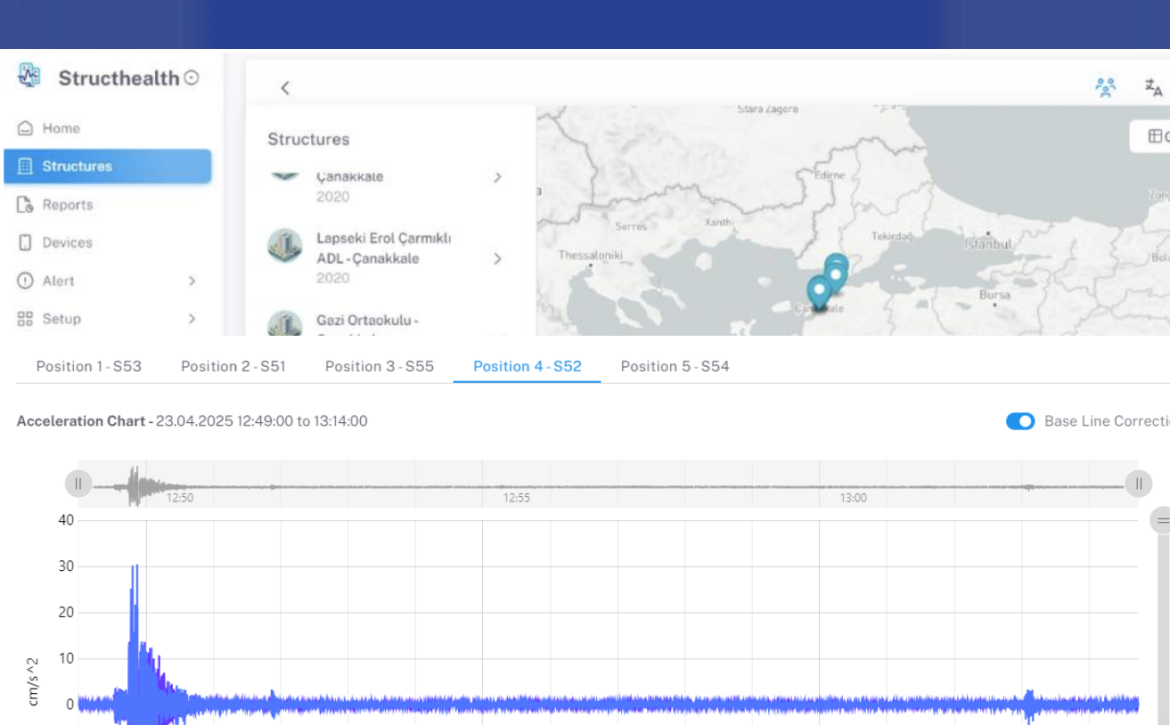
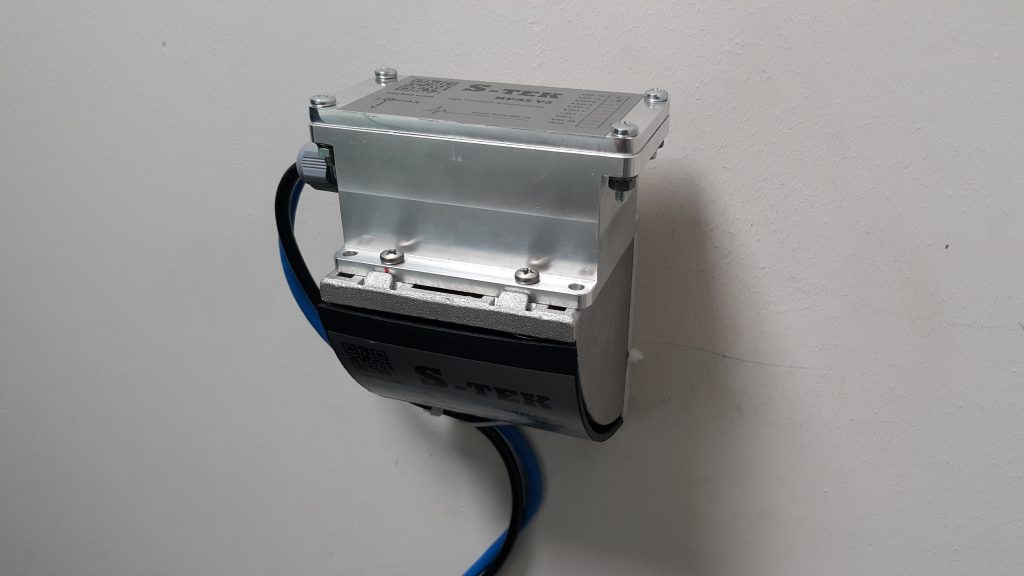
The published work focuses on a scalable structural health monitoring framework designed to support rapid, data-driven decision-making after earthquakes. The proposed system integrates multi-axis MEMS accelerometers, inclinometers, edge-level processing, cloud-based analytics, and automated damage interpretation into a unified architecture. Rather than functioning as a simple sensor network, the system is developed as a full monitoring and assessment platform capable of transforming raw structural response data into engineering insight. MDPi
Why post-earthquake rapid assessment matters
IoT-based structural health monitoring is becoming a critical engineering tool for post-earthquake building assessment, especially in high-risk seismic regions.Following an earthquake, one of the most critical challenges for engineers, facility owners, and public authorities is determining whether a structure can continue to operate safely. Conventional visual inspections remain essential, but they can be delayed by transportation disruptions, aftershocks, limited expert availability, and the scale of the building inventory that must be evaluated within a short time.
This is where IoT-based structural health monitoring becomes especially valuable. By continuously measuring and analyzing the dynamic response of a building, a monitoring system can provide rapid and objective information about structural behavior immediately after a seismic event. Instead of relying solely on external visual signs, engineers can also evaluate how the structure actually responded during the earthquake.
A monitoring architecture designed for real-world deployment
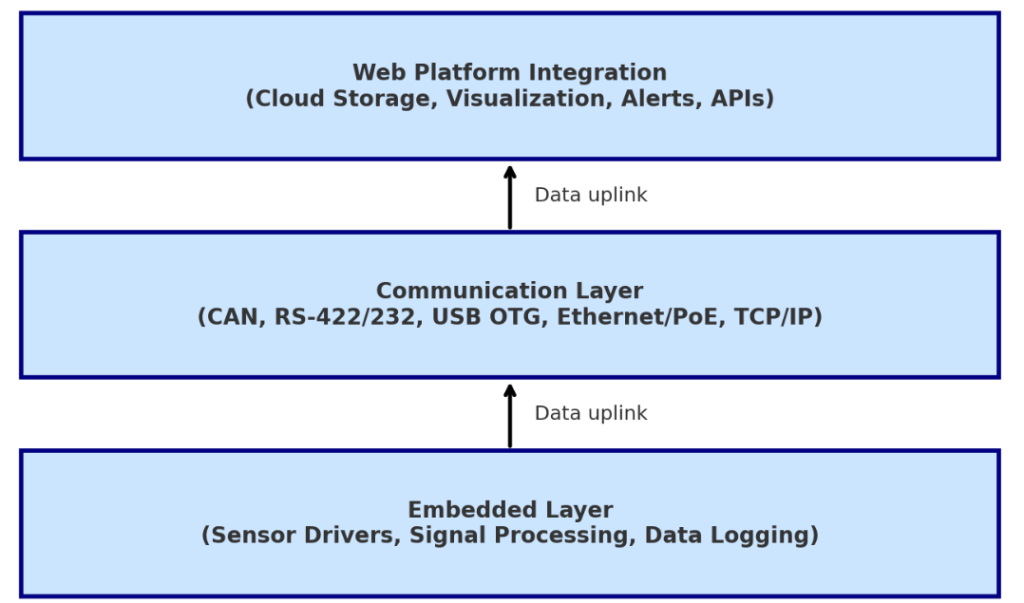
The core contribution of our published study is the development of a scalable SHM architecture suitable for real-world operation in seismic regions. The platform combines:
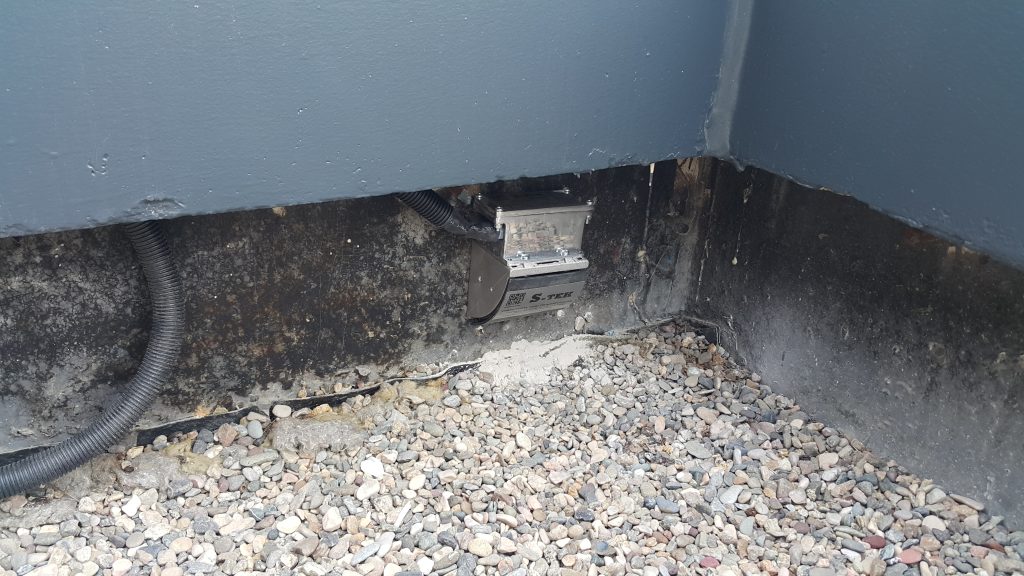
- multi-axis MEMS accelerometers for dynamic motion measurement,
- inclinometers for tilt and permanent drift tracking,
- local gateway and edge-processing components for event-based data handling,
- cloud infrastructure for storage, analysis, and visualization,
- and a web-based interface for rapid engineering interpretation.
This architecture is designed to support both continuous monitoring and event-triggered assessment. During normal operation, the system maintains a stable observation layer over the structure. When a seismic event occurs, the platform automatically processes the recorded data, extracts key performance indicators, and generates interpretable outputs for post-earthquake evaluation.
A major advantage of this approach is that it reduces the gap between raw instrumentation and decision support. In many monitoring systems, data collection is achieved successfully, but the interpretation stage remains manual, fragmented, or slow. Our approach addresses this challenge by linking sensing, processing, analytics, and reporting within a single workflow.
From raw vibration data to structural performance indicators
A central technical aspect of the study is the use of multiple structural indicators rather than a single damage metric. This is important because post-earthquake behavior cannot be reliably represented by one parameter alone. Buildings may exhibit subtle changes in stiffness, transient torsional effects, localized displacement demands, or residual tilt without showing immediate visible distress.
For this reason, the proposed methodology evaluates several response features together, including:
Natural frequency and period shifts
Changes in dynamic characteristics are among the most widely used indicators in structural health monitoring. A reduction in natural frequency may indicate stiffness degradation or damage accumulation. By comparing the structural response before and after seismic excitation, the system can detect whether the building exhibits a meaningful change in its modal behavior.
Inter-storey drift and roof displacement
Relative floor displacement is one of the most important measures of seismic demand. Excessive inter-storey drift can be associated with non-structural damage, cracking, or more severe structural response. Roof displacement also provides a practical representation of global lateral behavior and is especially useful in high-rise buildings.
Torsional irregularity
In asymmetric or irregular buildings, lateral motion may be accompanied by torsional response. Monitoring this effect is essential because torsional amplification can increase demand on certain vertical elements and floor regions. The study incorporates torsional behavior into the automated assessment logic, improving the robustness of the interpretation process.
Permanent tilt and residual deformation
Even when peak vibration levels do not indicate severe instability, residual deformations may still reveal damage or permanent structural change. Inclinometer-based monitoring allows the system to check whether the building exhibits measurable residual tilt after an event, which is highly relevant for rapid safety screening.
By combining these indicators, the platform produces a more reliable and engineering-oriented evaluation than a threshold based on a single signal feature.
Field validation on a real high-rise building
From an operational perspective, IoT-based structural health monitoring enables faster interpretation of structural response data and supports more reliable building screening after seismic events. One of the strongest aspects of the published work is that the system was not presented only as a conceptual framework or laboratory prototype. It was deployed and validated on a 22-storey reinforced concrete office building, allowing the research to demonstrate how the platform performs under actual field conditions.
This real-world validation is important for several reasons. First, high-rise structures exhibit complex dynamic behavior, including modal participation across multiple levels and possible torsional effects. Second, field deployment introduces practical engineering constraints such as sensor placement, communication stability, long-term data continuity, and event management. Third, the performance of a monitoring platform in a real building provides far more meaningful evidence than a purely theoretical or bench-scale demonstration.
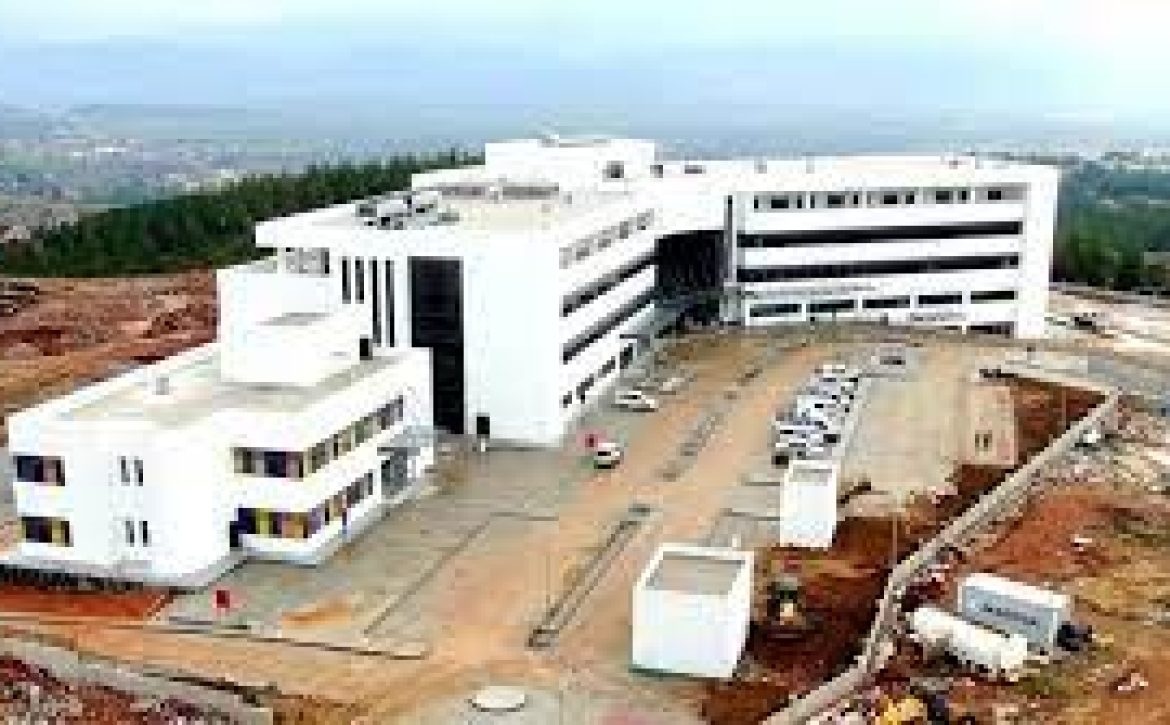
The study shows that the proposed platform can record structural response data from seismic events, process that data automatically, and support post-earthquake evaluation using a structured damage assessment logic. This makes the work directly relevant to owners and operators of office towers, hospitals, campuses, industrial facilities, and other critical assets located in seismic zones.
Why scalability is a key engineering requirement
For structural health monitoring to become truly useful at the city, portfolio, or institutional level, scalability is essential. A system that performs well on a single building is valuable, but the broader challenge lies in monitoring many buildings efficiently and consistently.
Our research therefore emphasizes a scalable event-based monitoring strategy. Instead of continuously pushing all raw high-frequency data to the cloud without prioritization, the architecture uses local intelligence and event-triggered workflows to optimize communication, storage, and processing loads. This is particularly important when dealing with large monitoring networks or building portfolios.
From an engineering operations perspective, scalability affects:
- bandwidth demand,
- storage efficiency,
- computational cost,
- alerting speed,
- and the practicality of large-scale deployment.
A scalable SHM system must not only measure accurately but also remain manageable when expanded across multiple structures. This is one of the reasons why edge processing and cloud orchestration were integrated into the system design.
Bridging structural monitoring and decision support
Another important contribution of the study is the move from conventional data logging toward decision-support-oriented SHM. In many practical scenarios, asset owners do not simply need waveform data; they need concise and defensible answers to questions such as:
- Did the building remain within expected performance limits?
- Was there evidence of excessive drift or abnormal torsional response?
- Is there any sign of permanent deformation?
- Should the building be prioritized for detailed engineering inspection?
Our platform addresses this need by converting measured data into a performance-oriented interpretation layer. This does not replace detailed engineering investigation, but it significantly improves the speed and quality of early-stage post-earthquake screening.
In this sense, IoT-based structural health monitoring becomes more than a sensing technology. It becomes a tool for risk-informed operational decision-making.
What this publication means for StructHealth
For StructHealth, this publication is more than an academic achievement. It confirms that the monitoring philosophy we have been developing — combining field-ready hardware, real-time analytics, scalable communication architecture, and automated engineering evaluation — can stand on both practical and scientific ground.
Our work reflects a broader vision for the future of structural monitoring: systems that are not only technically precise, but also operationally useful, scalable, and aligned with real post-earthquake needs. We believe that this direction is essential for improving resilience in buildings and infrastructure exposed to seismic hazard.
Looking ahead
The publication also supports the next stage of development for advanced structural monitoring solutions. Future progress in this field will increasingly depend on deeper integration between sensing systems, digital twins, structural models, automated modal analysis, and intelligent reporting environments.
At StructHealth, we see IoT-based structural health monitoring as a foundation for this larger ecosystem. The long-term goal is not only to observe structures, but to create continuously updated digital representations of their condition and behavior, enabling more proactive asset management and more confident post-event decisions.
Conclusion
This study confirms that IoT-based structural health monitoring can provide a scalable and technically robust foundation for post-earthquake rapid assessment. Our published research demonstrates that IoT-based structural health monitoring for post-earthquake rapid assessment is a practical and technically robust approach for modern seismic risk management. By integrating MEMS sensing, inclinometer-based residual response tracking, edge processing, cloud analytics, and multi-parameter damage interpretation, the proposed platform offers a comprehensive pathway from structural response measurement to actionable engineering insight.
As the need for resilient, data-driven infrastructure management continues to grow, we believe such systems will play an increasingly important role in post-earthquake evaluation, portfolio-scale monitoring, and the broader digital transformation of the built environment.